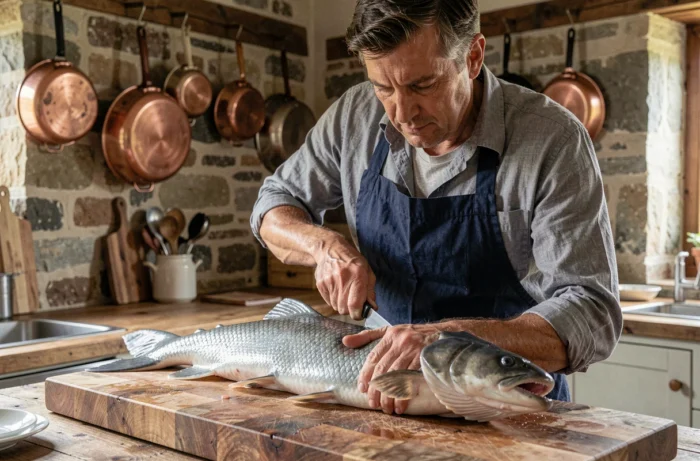
The catfish remains an unfamiliar river fish in French home kitchens. Abundant in several waterways, particularly in the Dordogne and the Loire basin, it offers firm, white flesh that some chefs compare to that of monkfish. Its unflattering reputation is more due to its appearance than its taste qualities.
Cooking catfish at home requires understanding some specifics of its flesh and adapting cooking techniques accordingly.
Texture and taste of catfish: what changes compared to sea fish
The flesh of catfish strikes a balance between lean and fatty, giving it remarkable hold during cooking. Unlike cod, which easily flakes, a catfish steak remains compact, even after a prolonged time in the oven or on the stovetop.
This firm flesh comparable to monkfish explains why chefs like Bruno Marien, based in La Roque-Gageac in Périgord, regularly include it on their menu. Catfish can handle grilling, confit, frying, or carpaccio equally well.
The point of caution lies in the taste. Catfish is a bottom-dwelling fish, and its flesh can have a slight bitterness. To mitigate this note, two techniques work well: removing the superficial layer of skin (sometimes slightly red) and pairing the fish with saffron, which enhances its flavor without masking it. Anyone looking for a catfish recipe on Cuisine Gratuite will find these basic principles applied to various preparations.
Cooking catfish in a skillet: the degreasing technique
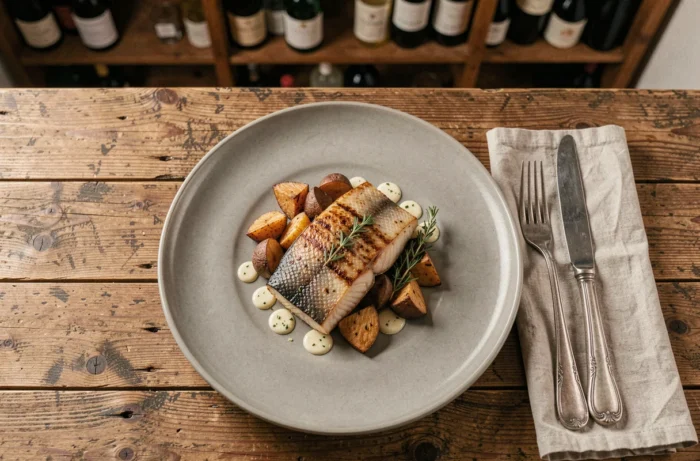
The skillet is the most accessible cooking method for a first attempt. The method relies on a step that classic white fish recipes do not require: a two-pass degreasing.
Heat a drizzle of olive oil in a skillet over low heat, then place the steaks in it. After a few minutes, the fat from the fish is released. Remove the steaks, wipe the skillet, and repeat the process. The result is firm, well-white flesh, free from excess fat that may displease unaccustomed palates.
This gentle double cooking distinguishes catfish from most sea fish. Trying to sear it over high heat from the start, as one would with sea bass, risks hardening the surface while leaving the center too fatty. Patience pays off here more than the power of the heat.
Seasoning for pan-fried catfish
Garlic and lemon work well in a simple combination. Butter added at the end of cooking, with a few flakes of golden garlic and a splash of lemon juice, yields a result similar to a meunière without the heaviness. Salt should be added after cooking, not before, to avoid drawing water from the flesh during degreasing.
Catfish in the oven with shallot sauce: a more structured approach
The oven is particularly suitable for thick pieces, such as the back or central steak. The idea is to combine the skillet (for the initial degreasing) and the oven (for even cooking throughout).
The shallot sauce provides the necessary acidity to balance the sweetness of the flesh. Sauté the chopped shallots in butter, deglaze with white wine, then let it reduce. The fish is placed in an oven-safe dish, coated with this sauce, and cooked at a moderate temperature.
- Remove the superficial layer of skin before cooking to eliminate residual bitterness
- Sear the steaks in a skillet with a bit of olive oil for the first degreasing, then soak up the released fat
- Bake at low heat, coated with shallot sauce, monitoring the flesh to ensure it remains white and opaque
- Serve with a seasonal vegetable that adds crunch (green asparagus, green beans, roasted fennel)
Chef Bruno Marien, for example, offers a catfish back wrapped in bacon with asparagus, combining the fat of the bacon with the firmness of the fish and the freshness of seasonal asparagus. This type of seasonal pairing gives catfish a regional dimension that few freshwater fish achieve.
Catfish fried, confit, or carpaccio: the less expected formats
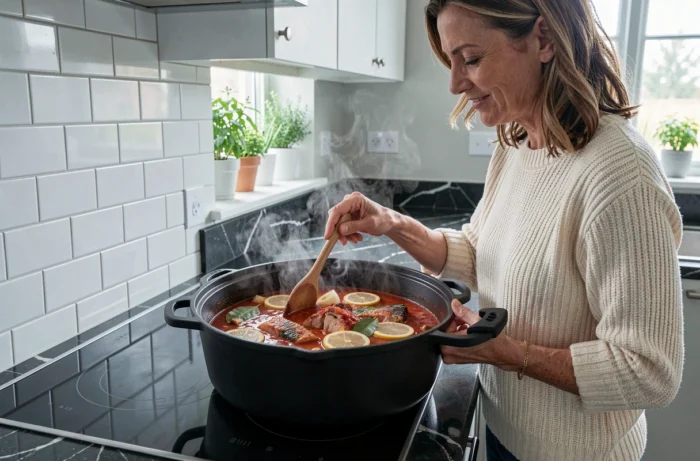
The versatility of catfish goes beyond the skillet and oven. When fried, cut into evenly sized pieces and lightly breaded, it produces crispy bites with tender flesh. This appetizer format works well to introduce the fish to skeptical guests.
Confit catfish involves long cooking in a fat (olive oil or duck fat) at low temperature. The result resembles duck confit in its melting texture but with a distinctly more delicate flavor. Some chefs take the transformation even further, with a ham-style aged catfish, dried and cured over several weeks.
Carpaccio, on the other hand, showcases the raw flesh. For this preparation, the freshness of the fish is non-negotiable. The thin slices are seasoned with olive oil, fleur de sel, and citrus. Field feedback varies on this point: some find the texture perfect when raw, while others deem it too firm without a slight lemon marinade beforehand.
Why catfish is gaining ground among chefs in France
Catfish has a clear economic advantage. Its price remains significantly lower than that of monkfish or pike-perch, for a quality of flesh that is comparable. Abundant and inexpensive fish, it also aligns with a short supply chain: professional freshwater fishermen supply certain restaurateurs directly.
The underlying trend is documented. Le Chasseur Français noted that catfish is increasingly being cooked by chefs, despite its reputation. Culinary demonstration formats, such as a video where three chefs prepare catfish in different ways, contribute to this gastronomic normalization.
For the amateur cook, catfish offers a rare experimental ground at this price level. Its flesh tolerates cooking mistakes better than that of most white fish. And the techniques described here (two-pass degreasing, pairings with saffron or shallot, gentle oven cooking) are sufficient to achieve a result that even a discerning palate will appreciate.