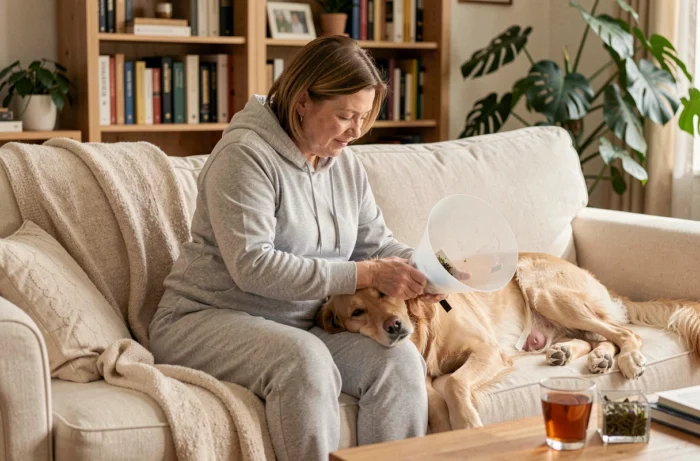
A dog returning home from the clinic after a splenectomy often wears a cone, has an abdominal bandage and looks glassy-eyed. The first few hours at home set the tone for the entire recovery. Managing a dog’s recovery after spleen removal means understanding what is happening beneath the incision, as well as what will change in the animal’s daily life over the long term.
Histopathology results after splenectomy: what determines the next steps
It is easy to think the hardest part is over once the dog wakes up. The reality is more nuanced: the removed spleen is sent for histopathological analysis, and the results are what truly guide veterinary follow-up.
For splenic hemangiosarcoma, the prognosis varies depending on the stage. Adjuvant chemotherapy may be discussed with the veterinarian, even if the dog appears to be recovering normally. An ultrasound or X-rays showing no visible abnormalities are not always enough to rule out microscopic disease.
Before focusing on comfort at home, it is worth asking the veterinarian two questions: what the tests can tell you, and what they cannot rule out. The histological diagnosis changes the care plan, not just the long-term prognosis. Regular follow-up (ultrasound checks and blood tests) will probably be recommended in the months after surgery.
To better understand recovery after a dog’s spleen has been removed, it is worth learning about the different reasons for splenectomy and their respective implications.
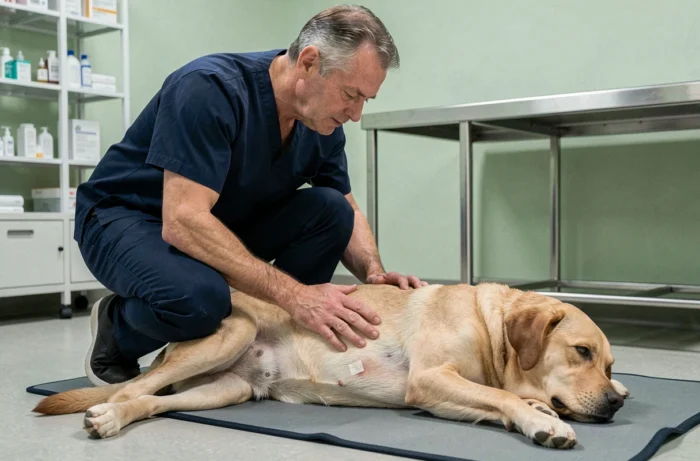
Rest and exercise after abdominal surgery
After major abdominal surgery, internal tissues take much longer to heal than the visible wound. A closed incision does not mean full recovery. The muscle layers and peritoneum continue to heal for several weeks.
Restrict movement without confining your dog completely
Strict rest does not mean total immobility. The goal is appropriate confinement: a quiet room, a bed on the floor (not a sofa or raised bed), and short-leash trips outside for bathroom breaks only. Stairs, jumping and playing with other dogs should be avoided until the veterinarian gives the all-clear.
A dog used to running around in the garden may find this restriction difficult. Chew toys or scent-based enrichment (snuffle mats, treats hidden in a rolled-up towel) can help ease frustration. These activities channel mental energy without putting strain on the abdomen.
Gradually resume walks
Return to activity should be gradual. Start with walks lasting a few minutes on a leash, on flat ground. If the dog shows no signs of pain or excessive fatigue, add a few minutes each week. Any limping, shortness of breath or reluctance to walk warrants a call to the veterinarian.
Daily post-operative care for a dog without a spleen
At-home care rests on three pillars: monitoring the incision, managing pain and feeding.
Check the incision and watch for warning signs
Check the incision at least twice a day. Look for:
- Redness spreading beyond the edges of the wound, unusual swelling or pus-like discharge, which may indicate an infection
- Partial opening of the incision, especially if the dog has managed to lick or scratch it despite wearing a cone
- Pale mucous membranes (gums or the inside of the eyelids) or a distended abdomen, which may indicate post-operative internal bleeding
- Fever, complete refusal to eat for more than twenty-four hours or marked lethargy
The cone or protective recovery suit should stay on at all times. A dog left unprotected for just a few minutes may reopen the wound by licking it.
Pain management and medication
The veterinarian will generally prescribe painkillers and sometimes anti-inflammatory medication for the first few days. Follow the schedule and dosage exactly. Never give human medication (ibuprofen, acetaminophen) without veterinary advice: some medications are toxic to dogs.
A dog that whines, pants while resting or refuses to lie on the side where the surgery was performed may be in pain that is no longer controlled by the prescribed medication. Contact the clinic to adjust the treatment rather than waiting for the next check-up.
Adjust your dog’s diet during recovery
A returning appetite is a good sign of recovery. Divide meals into smaller portions (three to four times a day instead of twice) to limit abdominal distension. A digestible diet recommended by the veterinarian reduces the workload on the digestive system while the tissues heal.
Behavior after spleen removal: what changes in daily life
A dog can function without a spleen. Other organs (the liver and bone marrow) take over some of the immune and blood-filtering functions performed by the spleen. The adjustment period varies depending on the dog’s age, physical condition before surgery and the condition that led to the splenectomy.
Common changes in the weeks after surgery include more noticeable fatigue during exercise and, sometimes, increased susceptibility to infections. The veterinarian may recommend an adjusted vaccination schedule and regular blood tests to monitor immune parameters.
In terms of behavior, some dogs regain their usual energy within a few weeks. Others remain calmer over the long term, especially older dogs or those receiving additional treatment (chemotherapy). In these cases, adjust their routine without trying to restore their pre-surgery activity level.
- Monitor weight: a less active dog that eats as much as before may gain weight, making recovery more difficult
- Maintain a consistent routine: regular mealtimes, walks and rest periods help reassure a dog during recovery
- Observe social interactions: a dog that withdraws or growls unusually may be expressing lingering pain or distress
Recovery after a splenectomy is not limited to the first few post-operative weeks. Veterinary follow-up, histology results and gradual adjustments to the dog’s lifestyle all play a part. Every veterinary check-up is an opportunity to adjust the care plan based on the dog’s actual progress, rather than a theoretical timeline.