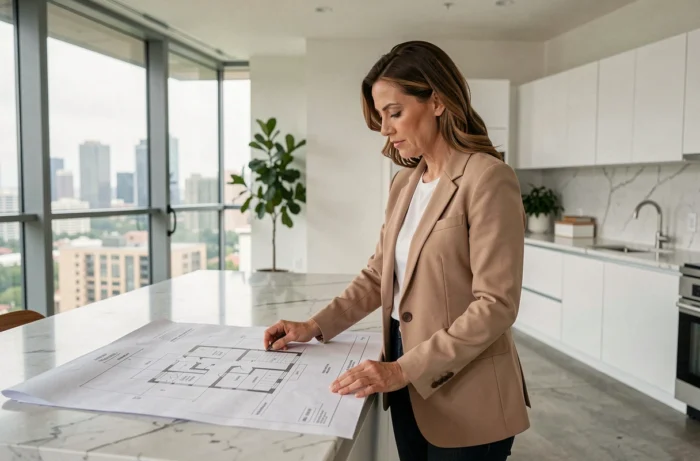
The French real estate market is going through a stabilization phase after several quarters of correction. Sales volumes in the old market increased in 2025, but projections for 2026 anticipate a slight decline in transactions, with prices remaining largely stable. Understanding this dynamic allows for better decision-making, whether it involves a purchase, renovation, or simple decor refresh.
Price Gap Between Apartments and Houses: What the 2026 Figures Reveal
The notaries of France describe a market that is finding a balance, where the increase in transactions is no longer accompanied by a surge in prices. This observation hides a reality of two speeds.
Apartments show a slight hold or even moderate increases in certain metropolitan areas. Houses, on the other hand, are stagnating or experiencing a slight decline. This discrepancy is explained by a shift in demand towards urban centers, where proximity to transport and services remains a key criterion for buyers.
To follow these developments and cross-reference market data with practical layout advice, real estate information on Déco et Jardin provides complementary insights to official barometers.
The UNIS barometer for the first quarter of 2026 confirms this fragile recovery and a two-speed market. Buyers are hesitant, prices are adjusting slowly, and negotiation is becoming possible again on many properties, especially outside major urban areas.

Residential Investment and New Construction: A Supply Tension to Monitor
The gap between a soft recovery in the private market and a contraction in professional investment weighs on the supply of new housing. Data from the Ministry of Ecological Transition shows that new construction remains below pre-crisis levels.
This scarcity of new supply has direct consequences on the old market. Buyers who cannot find new projects turn to existing properties, which maintains pressure on prices in tight areas.
Energy Renovation as a Value Lever
Energy renovation is becoming a central parameter in the value of a property. A home rated F or G on the energy performance diagnosis (DPE) suffers a significant depreciation upon resale. Conversely, a property renovated to current standards gains attractiveness.
Insulation work, replacement of joinery, or installation of an efficient heating system are no longer just about comfort. They determine the ability to sell or rent within reasonable timeframes.
Interior Decor Trends: Natural Materials and Earthy Colors
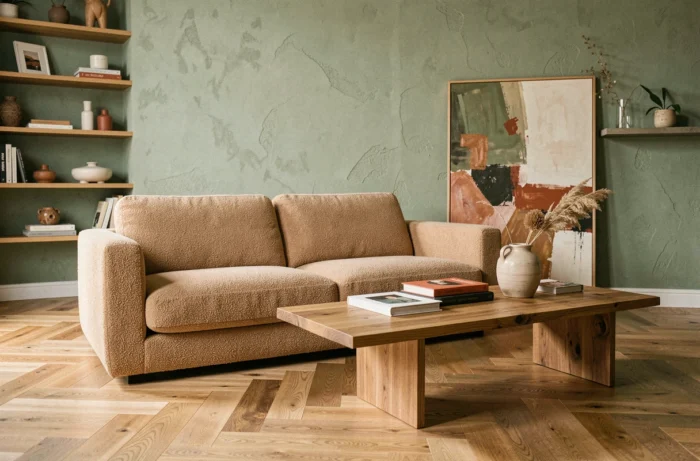
The decoration trends of 2026 extend a movement that began in recent years. Wood, linen, and raw materials dominate interiors, driven by a quest for authenticity and sustainability.
Earthy colors (terracotta, warm beige, sage green) are gradually replacing the cool tones that characterized the previous decade. This chromatic choice aligns with natural materials and creates a soothing atmosphere, sought after in living spaces.
Multifunctional Furniture and Space Optimization
The rise in price per square meter in metropolitan areas is prompting residents to rethink the layout of each room. Multifunctional furniture (extendable table, bed with integrated storage, foldable desk) is emerging as a concrete response to reduced spaces.
- Custom furniture allows for the exploitation of corners, sloped ceilings, and niches that standard furniture does not cover.
- Movable partitions or workshop-style glass walls separate spaces without blocking light, an asset in cross-ventilated apartments.
- Vertical storage (wall shelves, storage columns) frees up floor space and gives a more generous sense of volume.
The goal is not to overload a small space with gadget solutions, but to choose two or three arrangements that truly transform the daily use of a room.
Home Staging and Value Enhancement Before Sale: Practical Tips
Home staging involves depersonalizing and enhancing a property to speed up its sale. In a market where buyers take their time and compare more, the first impression becomes a negotiation lever.
The principles remain simple but are often poorly applied:
- Declutter each room so that the buyer can envision themselves there. Removing a third of the furniture is usually enough to change the perception of a space.
- Harmonize wall colors with neutral and bright shades. An off-white or light gray suits most configurations.
- Pay attention to lighting by multiplying sources of indirect light (accent lamps, discreet garlands) rather than relying on a single central ceiling light.
- Address visible minor defects (blackened joints, damaged door handles, yellowed electrical outlets) that send a disproportionate signal of neglect compared to their repair cost.
A well-executed home staging does not turn a mediocre property into a favorite, but it reduces the selling time and limits the buyer’s negotiation margin.

The 2026 real estate market rewards owners who combine energy performance with careful presentation. The stabilization of prices leaves little room for speculative gains, refocusing the value of a property on its intrinsic qualities: insulation, brightness, functional layout, and overall condition of finishes.