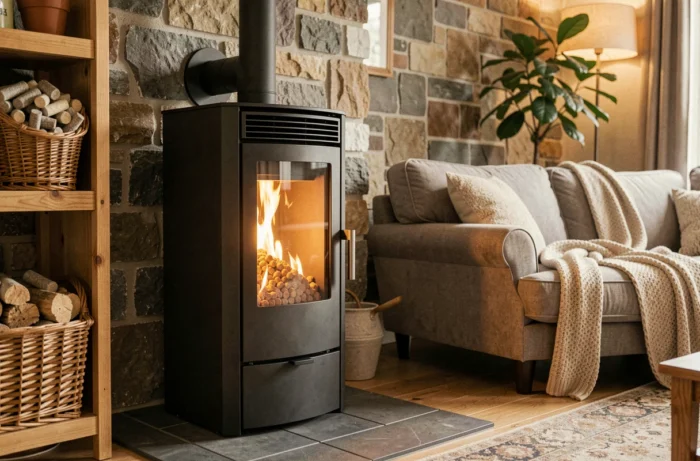
A pellet, or wood pellet, is a cylinder of compressed sawdust about six to eight millimeters in diameter, made without glue or chemical additives. Its high density gives it a higher calorific value than that of a traditional log, with a much lower moisture content. This technical characteristic explains the growing interest in pellet heating in residential homes.
Partial Load Emissions: The Criterion Not Detailed in Product Sheets
Most pellet stoves display high efficiency at nominal power, meaning when the device is operating at full capacity. In practice, a stove spends a large part of the heating season operating at reduced power, at partial load.
Since January 1, 2025, the Flamme Verte reference requires new devices applying for the label to declare their emissions at partial load. A device can therefore be efficient at full power but less clean when operating at low speed. This point deserves to be checked before any purchase.
To compare the technical sheets of different models and understand the specifics of this heating method, the resources available on chauffage-pellets.org allow for cross-referencing manufacturer data with user feedback.
Prefects can also impose restrictions in areas covered by an Air Protection Plan, particularly regarding installed devices or permitted fuels. There is no general national ban on wood heating, but local regulations can render certain devices non-compliant depending on the geographical area.
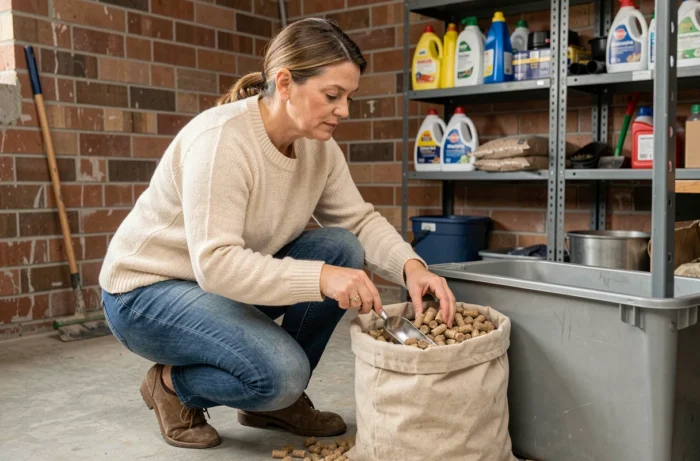
ENplus or DINplus Certified Pellets: How Fuel Quality Makes a Difference
Not all pellets are created equal. A low-quality pellet, too moist or irregular, generates more residues in the combustion chamber, clogs the glass and the flue, and can cause unexpected shutdowns of the device.
The ENplus and DINplus certifications guarantee a moisture content, diameter, and density that meet specific thresholds. These certified pellets burn more consistently, which reduces fine particle emissions and extends the intervals between cleanings.
- A certified pellet produces less ash, limiting the fouling of the burner pot and heat exchanger.
- The consistency of the diameter prevents blockages in the auger that feeds the combustion chamber.
- A low moisture content directly improves combustion efficiency, thus the heat output per kilogram burned.
Choosing a certified pellet represents a modest additional cost at purchase but reduces maintenance costs and recurring breakdowns. Over a full season, the net savings often favor the higher quality pellet.
Chimney Sweeping and Annual Maintenance: The Recurring Cost to Include in the Budget
The comfort of a pellet stove relies on regular maintenance that goes beyond simply emptying the ash pan. Since the decree of December 27, 2023, chimney sweeping must be performed at least once a year by a professional. Some local regulations require two annual sweeps.
Maintenance includes cleaning the combustion chamber, checking the operation of the auger, inspecting the flue for leaks, and adjusting the combustion if necessary. Neglecting these tasks gradually degrades the device’s efficiency and increases pollutant emissions.
Many homeowners calculate the profitability of their stove by comparing only the price of pellets to the price of gas or electricity. This calculation is incomplete without adding the annual cost of chimney sweeping and maintenance. A poorly maintained device consumes more pellets to produce the same amount of heat, which negates some of the expected savings.
Signs of Insufficient Maintenance
- The glass of the combustion chamber darkens quickly after cleaning, indicating incomplete combustion.
- The stove shuts down or errors out recurrently without apparent reason.
- The pellet consumption increases for the same level of thermal comfort.
- Unusual odors are emitted during operation.
Pellet Stove as Primary or Supplementary Heating: Proper Sizing is Key
A pellet stove can serve as primary heating in a well-insulated home of moderate size, typically a single-story house. In a larger or multi-level dwelling, it works better as a complement to a central system.
Sizing depends on the area to be heated, the level of insulation of the building, and the configuration of the rooms. An oversized device will run continuously at partial load, which degrades its environmental performance as explained above. An undersized device will not meet the needs on the coldest days.
Channelable stoves allow heat to be distributed to other rooms via a network of ducts, extending thermal coverage without installing a second device. Hydraulic models can connect to an existing hot water circuit to supply radiators or underfloor heating, transforming the stove into a true wood central heating system.
The choice between natural convection, forced convection, channelable, or hydraulic models directly depends on the configuration of the home. A device suited to the space it needs to heat remains the primary condition for a profitable and comfortable installation over time.
Pellet heating combines a renewable fuel, automation that simplifies daily use, and a cost per kilowatt-hour that remains competitive compared to gas or electricity. The trade-off lies in the care taken in choosing the device, the quality of the pellet, and adherence to the maintenance schedule. These three parameters determine, season after season, the difference between a profitable investment and a source of frustration.