
Launching a renovation project in France today means dealing with a rapidly evolving regulatory framework, public aid undergoing restructuring, and administrative procedures that can sometimes be more complex than the work itself. For any homeowner considering a renovation of a house or apartment, the challenge lies not only in choosing contractors or calculating the budget, but in the ability to coordinate each step without wasting time or money.
Administrative Frictions Before the Project: What Has Changed for Aid Applications
Content dealing with renovations often focuses on the budget, comparative quotes, or the order of interventions. Very few address a point that has become crucial since the start of the 2026 school year: the aid application procedure now goes through france-renov.gouv.fr, with enhanced authentication via FranceConnect+ or verification by postal mail.
This change has concrete consequences on the work schedule. Creating an account, migrating an old MaPrimeRénov’ or Mon Projet Anah file, and then validating one’s identity can take several weeks. However, the aid must be granted before the start of the project, or there is a risk of losing the benefit.
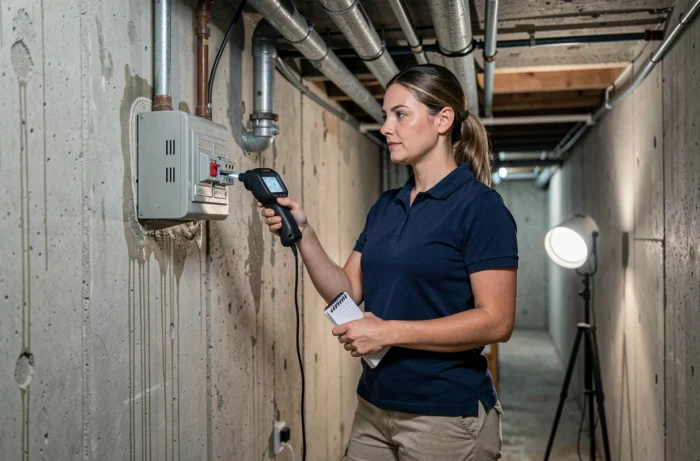
Anticipating this step from the diagnostic phase helps avoid a delay of several months between signing the quote and the first pickaxe blow. When preparing the work with Detectis Immo, this coordination between technical diagnosis and administrative setup is part of the initial project framing.
MaPrimeRénov’ and Large-Scale Renovation: The Refocusing of Aid in 2026
Since the start of the 2026 school year, MaPrimeRénov’ prioritizes comprehensive renovations and electrification at the expense of so-called “gesture” work. Sole insulation, window replacement, wood stoves, solar water heaters, or simple ventilation are gradually falling out of the aid scope.
This refocusing profoundly alters the financing logic. A homeowner who planned to insulate their attic one year and then change their boiler the following year now faces a choice: consolidate the interventions into a large-scale project to access grants, or finance each gesture out of pocket.
The heat pump remains one of the best-supported devices under the scheme. However, pellet stoves and simple ventilation systems no longer receive the same level of support. For a property classified F or G in the energy performance diagnosis, comprehensive renovation becomes almost the only way to access significant amounts.
What This Implies for Financial Structuring
The gradual elimination of gesture-based aid prompts a rethink of the budget from the energy audit stage. A large-scale renovation project costs more at the moment, but the remaining costs can be lower than those of several isolated interventions without grants.
The zero-interest loan (éco-PTZ) remains available to finance the additional costs, with a ceiling that depends on the number of gestures grouped in the file. Combining éco-PTZ and MaPrimeRénov’ on a comprehensive project requires a coherent file between the audit, quotes, and aid application, which reinforces the importance of structured support before the project begins.
Energy Audit and Diagnosis: Two Distinct Tools Not to Be Confused
The DPE (energy performance diagnosis) and the energy audit are often treated as synonyms in renovation guides. However, they are two documents with different purposes.
- The DPE classifies the property on a scale from A to G and is mandatory for any sale or rental. Its methodology is standardized and does not offer a personalized work scenario.
- The energy audit, on the other hand, analyzes the building in detail and proposes several quantified renovation scenarios, with an estimated energy gain for each option. It has been mandatory since 2023 for the sale of properties classified F or G.
- The audit is the reference document for creating a large MaPrimeRénov’ file, as it justifies the technical coherence of the project to the Anah.
Confusing the two leads to underestimating the cost of the preparatory phase. The audit is more expensive than the DPE, but it determines the work path and conditions access to the most substantial aids.

Thermal Sieves and Regulatory Timeline: Deadlines Impacting Renovation
The freeze on rents for properties classified F and G is already in effect. The ban on renting out G-classified properties has been in place since January 2025, and that for F-classified properties will follow according to the schedule set by the Climate and Resilience Law.
For landlord owners, these deadlines turn energy renovation into a legal obligation. A property classified G that has not undergone sufficient work to reach at least class F can no longer be offered for rent with a new lease.
Field feedback varies on the effective application of these bans, particularly for co-ownerships where work on the building envelope depends on a vote in the general assembly. The regulatory constraint exists, but its implementation varies according to configurations.
Planning Renovation According to Legal Timelines
Waiting until the last deadline to launch a project exposes one to two risks: the saturation of qualified RGE (Recognized Guarantors of the Environment) craftsmen in the months leading up to each deadline, and the inability to benefit from aids if the administrative file is not completed in time.
- Have the energy audit conducted at least six months before the targeted regulatory deadline.
- Submit the MaPrimeRénov’ application before signing the final quote, or risk having the file rejected.
- Check the RGE certification of each participant, a sine qua non condition for eligibility for public aids.
A well-sequenced renovation project starts with the audit, not with the choice of materials. It is the audit that determines the technical priorities, the amount of accessible aids, and the logical order of interventions on the site. Starting from the diagnosis rather than the finishes catalog remains the most reliable way to avoid additional costs and regulatory surprises.