
The anti-theft light stays on, the Boxer refuses to start, and you find yourself stranded in a parking lot or workshop with a van that no longer responds. Before considering an engine problem, it is often the electronic immobilization system that blocks the injection. Understanding how this protection works and how to temporarily bypass it can prevent unnecessary towing.
Difference between IMMO OFF and VIRGIN ECU on Peugeot Boxer
Two terms that circulate on forums are often confused, leading to costly mistakes. A VIRGIN ECU remains paired with the anti-theft system during the initial startup: it simply waits for a valid key to be associated with it through the manufacturer’s procedure.
An ECU in IMMO OFF mode, on the other hand, has undergone reprogramming that neutralizes the anti-theft logic in the engine control unit. This distinction is documented by ECUsale in its SID208 guide for Peugeot Boxer and Citroën Jumper. The nuance matters because replacing a VIRGIN ECU requires key-BSI-ECU pairing, while an IMMO OFF starts without transponder verification.
Before any manipulation, one can disable the anti-theft system of a Peugeot Boxer by following a structured procedure that always begins with diagnosing the actual fault.
Field Diagnosis Before Touching the Boxer’s Anti-Theft System
The problem is not always the anti-theft system itself. In the majority of cases reported by user feedback, the fault comes from the power supply or synchronization between the key, the BSI, and the engine ECU.
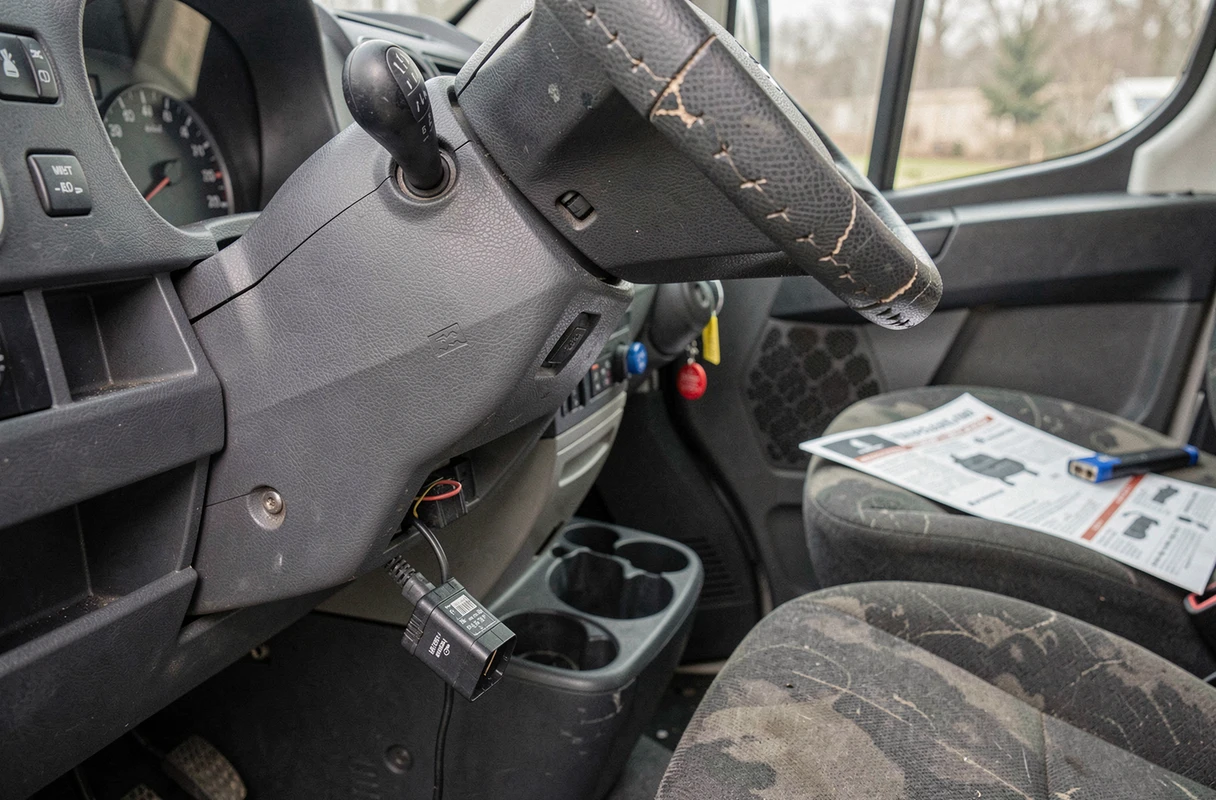
Before attempting to neutralize anything, check three elements in this order:
- Test a second key if available. A worn transponder or a weak remote battery is enough to block recognition, even if the cylinder turns normally.
- Check the battery voltage. A battery that drops below a certain threshold prevents the BSI from communicating properly with the ECU. On a van that has been parked for a long time, this is the most common cause.
- Check the ground connections of the BSI and the ECU. A poor contact on the negative terminal or oxidized ground on the chassis is enough to cut off electronic communication, and the anti-theft light comes on as if the key is not recognized.
If these three checks do not resolve the issue, move on to the next step.
Anti-Theft Deactivation Procedure by PIN Code on Peugeot Boxer
There is a documented method that requires neither diagnostic tools nor a computer. It relies on the vehicle’s PIN code, a code unique to each Boxer that the dealer can provide with the registration document and an ID.
Entering the PIN Code with the Accelerator Pedal
The procedure involves turning on the ignition (without starting), then pressing the accelerator pedal a number of times corresponding to each digit of the PIN code, with a pause between each sequence. The anti-theft light blinks to confirm the entry of each digit.
This method works on Boxers sharing the PSA platform with the Citroën Jumper and the Fiat Ducato. Feedback on this point varies depending on the vehicle generation and the version of the installed BSI. On newer models, the procedure may be disabled at the factory.
Retrieving the PIN Code Without Visiting the Dealer
The PIN code sometimes appears on a plastic card delivered with the new vehicle, stored in the technical pouch. On a used vehicle, this card is often missing. Only the manufacturer’s network can regenerate this code from the BSI serial number or the VIN.
There are online service providers that offer to calculate the PIN code remotely from the VIN number. Reliability depends on the provider, and the cost remains moderate compared to towing.
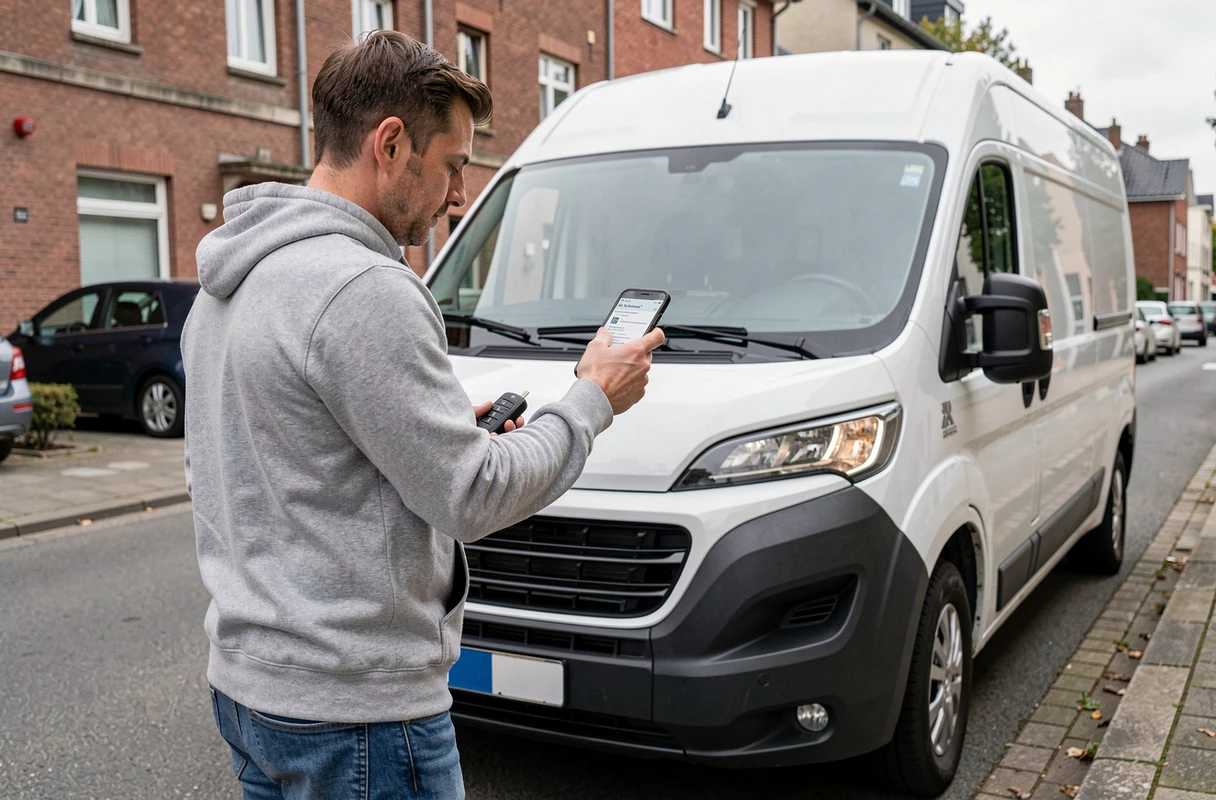
Telecoding via Diagbox: The Clean Way for Recent Boxers
On the latest generation Peugeot Boxers, permanent deactivation requires a PSA diagnostic tool like Diagbox. The principle: connect to the BSI via the OBD port, access the configuration menus of the immobilization system, and reprogram the key-ECU pairing.
The battery must be well charged throughout the operation, as a power cut during telecoding can corrupt the BSI memory. Some mechanics connect a battery maintainer in parallel to secure the intervention.
Diagbox also allows saving parameters before modification, which offers a possibility of reverting back. This approach is cleaner than a raw IMMO OFF because it maintains the consistency of the vehicle’s electronic architecture.
Anti-Theft Fuse on Peugeot Boxer: What Really Exists
It is often read that simply removing a fuse can neutralize the anti-theft system. There is no fuse labeled “anti-theft” on Peugeots. The system relies on an electronic architecture distributed between the BSI, the engine ECU, and the transponder antenna around the ignition switch.
Removing the fuse from the injection ECU does indeed cut the engine, but it also cuts the injection itself. This does not deactivate the anti-theft system; it simply prevents any starting. The confusion arises because the symptoms are similar: in both cases, the engine does not turn.
The fuses to check on the Boxer are those that power the BSI and the injection circuit, not to remove them, but to ensure they are not blown. A blown fuse on the BSI circuit can simulate an anti-theft blockage when the problem is purely electrical.
When the Boxer refuses to start and the light stays on, the most reliable method remains to trace back the chain: battery, ground, key, then PIN code or Diagbox. Randomly removing fuses or looking for a hidden switch leads nowhere with this type of architecture.