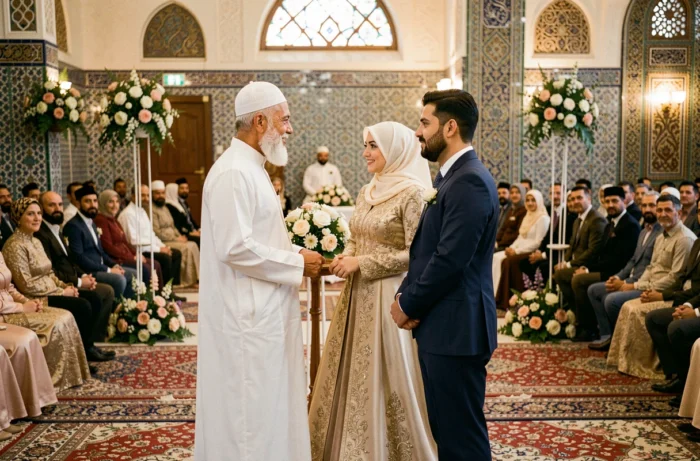
The Muslim religious marriage, or nikah, is based on specific pillars: mutual consent, the presence of a guardian (wali), two witnesses, and a dowry (mahr). However, the question of the cost of the imam officiating at this ceremony remains unclear for many couples. Between traditional free services and structured packages, practices vary according to mosques, regions, and the context of the celebration.
Imam for Muslim marriage: a free or paid service depending on the context
In Islamic tradition, the imam does not charge for services in the commercial sense. The celebration of the nikah is a religious act, not a transaction. Many mosques in France still offer the ceremony at no direct cost, with the imam being paid by the religious association managing the place of worship.
This apparent free service masks varying realities. Some mosques request a financial contribution in the form of a donation, the amount of which is not fixed but suggested. Other institutions, particularly large urban mosques, have established more transparent pricing structures, with amounts covering the use of the hall and the officiant’s time.
Couples looking to find an imam for the religious marriage often discover that the price depends less on the ceremony itself than on the location and additional services requested.
Ceremony at the mosque or nikah at home: different rates
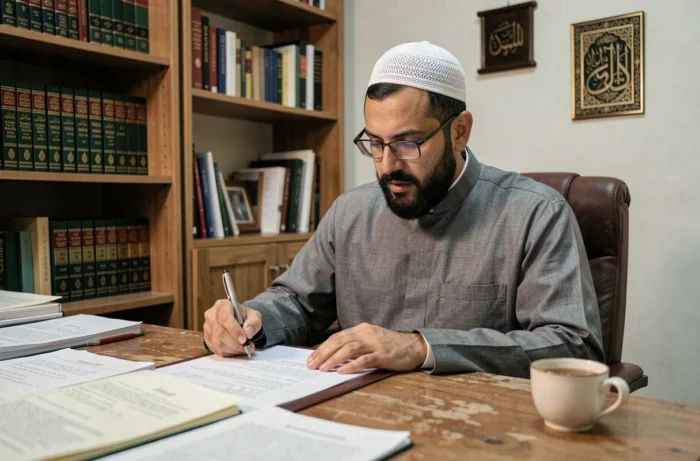
The location of the celebration is the primary factor influencing the cost. At the mosque, the ceremony is generally the least expensive option. The setting is already in place, the imam officiates at his usual location, and the costs often only involve a voluntary contribution.
When the couple asks the imam to travel to their home or a reception hall, the logic changes. The officiant must arrange his travel, adapt the ceremony to a non-religious setting, and dedicate more time to it. This setup incurs additional costs related to travel and the availability of the imam.
Recent trends, documented by several specialized platforms, show that some imams now offer structured packages that include:
- A preliminary meeting with the couple to verify the conditions for the validity of the nikah (consent, wali, witnesses, mahr)
- The ceremony itself, including the recitation of Quranic verses and the reading of the khotbah
- A religious marriage certificate, a document with no legal value in France but symbolically expected by families
This structuring into packages brings the imam’s service closer to an event planning service. Feedback on this point varies: some see it as a welcome clarification, while others believe it detracts from the spiritual nature of the ceremony.
Factors affecting the actual cost of an imam for a hlel
Beyond the location, several parameters influence the final amount. The region plays a decisive role: in Île-de-France, requests are more numerous and imams are in higher demand, which can drive prices up. In rural areas, the choice of available officiants is more limited, but the contributions requested often remain modest.
The time of year also matters. The majority of weddings in France take place between May and September. The most sought-after imams may be booked several months in advance during this period, and limited availability can sometimes be reflected in the amounts requested.
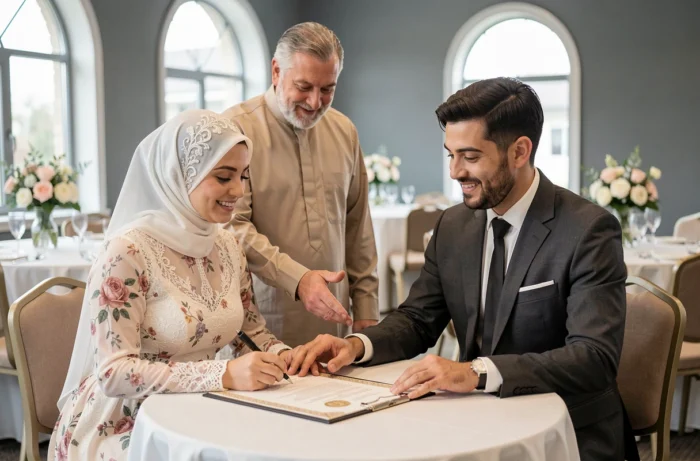
The level of customization of the ceremony also comes into play. A simple nikah, with the reading of the marriage contract and a few invocations, takes less time than a ceremony that includes a personalized speech, advice for the couple, and specific douas. The more elaborate the ceremony, the higher the expected contribution.
Finally, the reputation of the imam influences the fee. A recognized imam in his community, with a degree in Islamic sciences or affiliated with a prominent mosque, may request a higher contribution than a less known officiant.
Muslim religious marriage in France: the legal framework not to forget
Regardless of the amount paid to the imam, one point remains non-negotiable from a legal standpoint. In France, only civil marriage at the town hall produces legal effects: property rights, tax rights, inheritance rights. The nikah, even celebrated according to Islamic rules, has no legal value unless the civil marriage has been conducted beforehand.
This reminder is not trivial. Several mosques now refuse to celebrate a religious marriage if the couple cannot provide proof of a prior or scheduled civil marriage. This requirement aims to protect both spouses, especially in the event of separation, where the absence of a civil marriage leaves the spouse without any rights recognized by the state.
For couples, this means that the budget for the religious marriage adds to the cost of the civil marriage, rather than replacing it. Town hall fees (family record book, any administrative documents) remain a separate expense.
Dowry and additional costs: often underestimated items
The cost of the imam represents only a fraction of the overall budget for a Muslim religious marriage. The dowry (mahr), an Islamic obligation paid by the husband to the wife, constitutes a separate item. Its amount varies significantly depending on families, cultural backgrounds, and negotiations between the two parties. It can be a symbolic amount or a substantial sum.
Other frequently underestimated items include:
- The rental of a hall if the ceremony does not take place at the mosque
- The meal for the walima (post-ceremony banquet), the cost of which depends on the number of guests and the chosen caterer
- The traditional outfits, which can represent a significant budget depending on family traditions
- The decoration and musical entertainment, if the couple wishes for a festive celebration
Focusing solely on the cost of the imam provides a skewed view. The religious ceremony is part of a larger whole where each item interacts with the others. A couple opting for a simple nikah at the mosque frees up budget for the walima, and vice versa.
Transparency is improving, but practices remain very heterogeneous from one community to another. Contacting the mosque or the imam in question directly, asking about the expected amount straightforwardly, and comparing several options remains the most reliable approach to avoid surprises on the day of the ceremony.