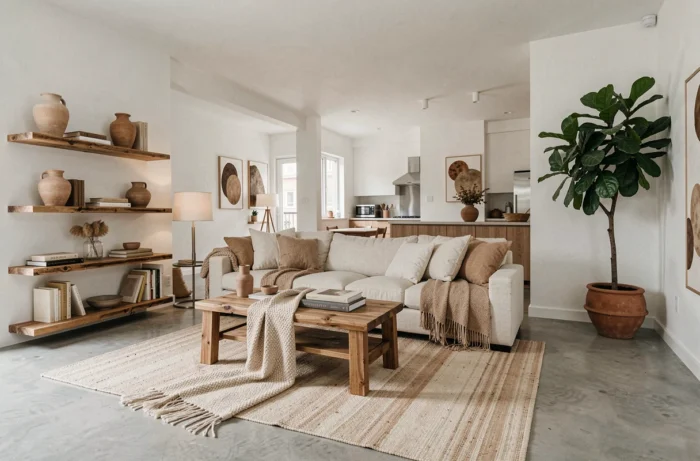
The interior decoration trends in 2026 mark a clear shift: cold minimalism is giving way to earthy palettes, tactile textures, and raw materials. Transforming your interior doesn’t necessarily require major renovations. Here are ten trendy, concrete, and actionable decoration ideas to breathe new life into every room of your home.
1. Earthy accent wall for the living room
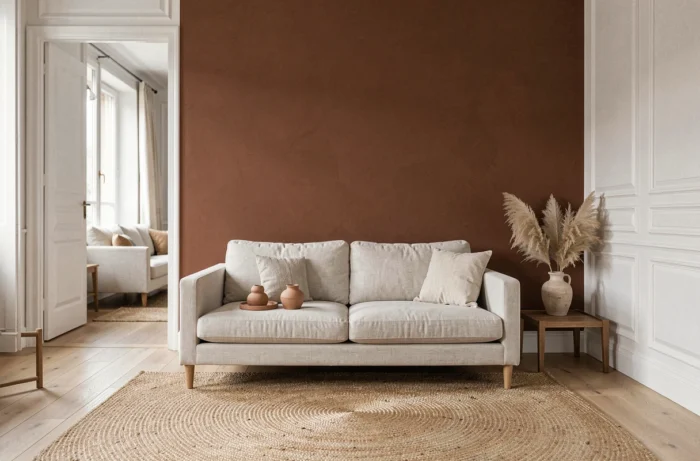
Painting just one wall in a terracotta, ochre, or olive green shade is enough to redefine the atmosphere of a living room. This approach aligns with the 2025-2026 trend of warm neutrals and earthy colors that are replacing the ubiquitous cool grays of recent years.
The advantage: one can of paint and a weekend. Choose the most visible wall from the entrance of the room to maximize the effect. Matte shades enhance the mineral aspect, while a satin finish reflects more natural light.
If you’re looking for color and style combinations suitable for each room, the French Home décor site offers selections that make these choices easier.
2. Cloud Dancer base from Pantone as a guiding thread
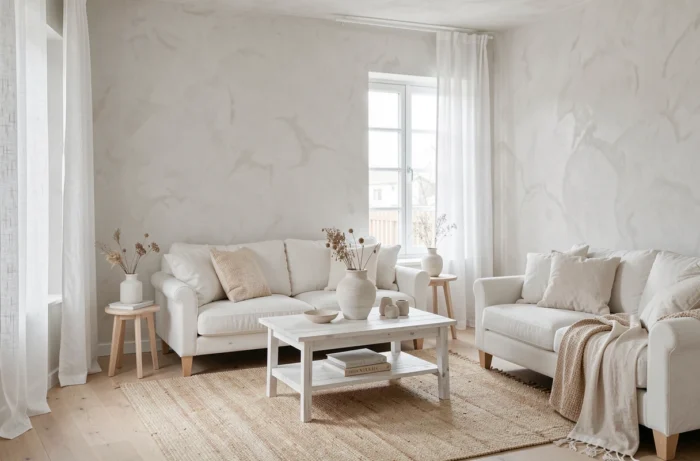
Pantone has designated Cloud Dancer (11-4201) as the color of the year for 2026: a soft, cottony white, far from the usual bright white. This shade serves as a bright yet warm backdrop for living spaces.
The idea is not to paint everything white. Cloud Dancer works as a neutral base enriched by deep hues: burgundy, chocolate brown, deep blue, or sage green. This play of contrasts replaces the classic black/white duality with something more organic.
On walls, ceilings, or simply bed linens, this shade adapts to both the bedroom and the living room without imposing heavy renovations.
3. Linen and jute textiles for a tactile living room
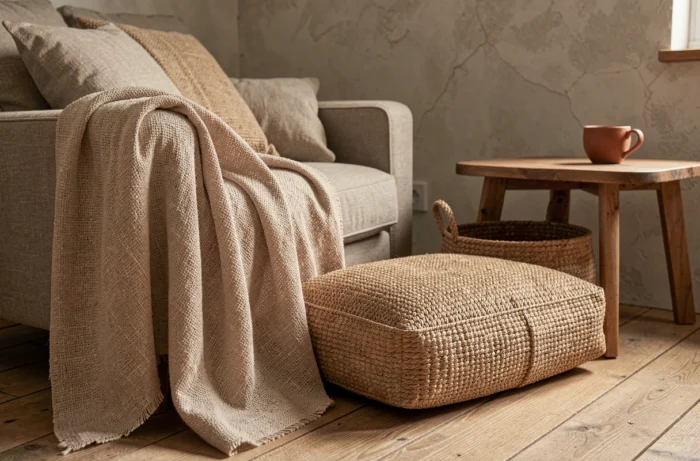
Upholstery fabric is one of the quickest levers to transform a space. Crumpled linen on cushions, woven jute on the floor, and boucle wool throws bring that tactile dimension that 2026 trend analyses describe as central.
Layering several natural textures in the same room creates visual depth without cluttering the space. A jute rug under a raw wood coffee table, raw linen cushion covers on a boucle fabric sofa: each surface tells a different story to the touch.
4. Handmade ceramics in the kitchen and bathroom
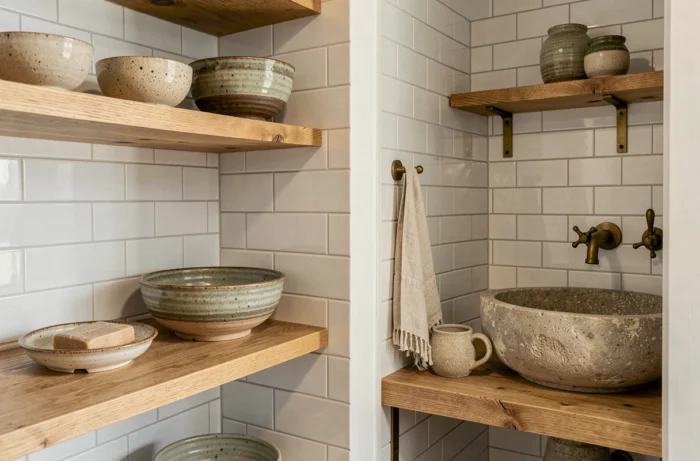
Handmade ceramic tiles, with their color variations and slight surface imperfections, are gradually replacing uniform backsplashes. In both the kitchen and bathroom, this material brings an immediate artisanal character.
Zellige formats or hand-glazed tiles in sage green, soft off-white, or deep blue fit into the trend of natural and imperfect materials that defines interior decor in 2026. A simple change of backsplash radically alters the perception of a room.
5. Raw wood and exposed stone as structural elements
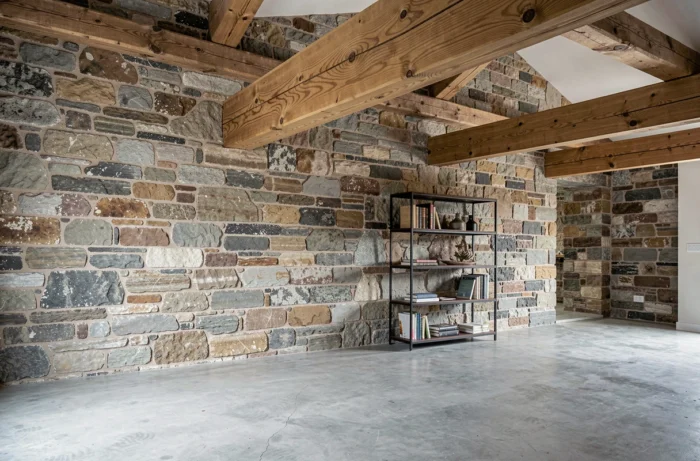
Exposing a beam, installing an untreated wood shelf, or revealing a stone wall are choices that contribute to the “warm minimalism” trend. These materials do not require sophisticated finishes to work.
Raw wood on a TV stand, a tabletop, or a headboard brings a presence that melamine cannot replicate. If your home lacks natural stone, veneer panels applied to a wall can produce a comparable effect for a fraction of the cost of a complete renovation.
6. Layered lighting to modulate the living room ambiance
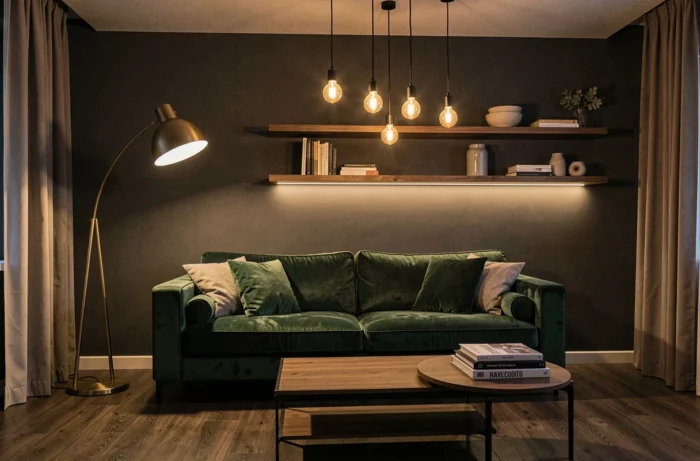
A single ceiling light is not enough to create an ambiance. The layered lighting technique involves combining three levels:
- Ambient light (pendant or ceiling light) for general room lighting
- Task light (desk lamp, reading lamp) focused on a work or reading area
- Accent light (string lights, candles, table lamp) to create an evening atmosphere
Changing light fixtures is often more effective than repainting to alter the perception of a space. Opt for warm temperature bulbs (around 2700 K) to stay consistent with current earthy palettes.
7. Oversized mirrors to enlarge a narrow room
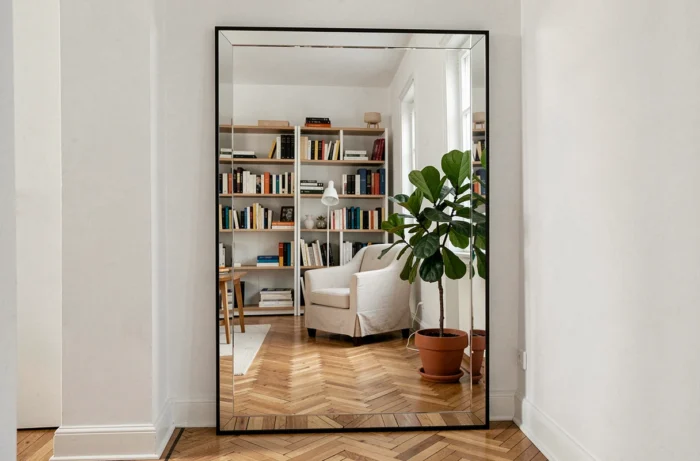
A large mirror placed on the floor or mounted on a wall facing a window doubles the perceived natural light. In an entryway, hallway, or small bedroom, this effect is immediate and requires no renovation work.
Light wood, rattan, or brushed metal frames complement the natural materials of the rest of the decor. A large round mirror in a living room breaks the geometry of rectangular furniture and adds visual movement to the space.
8. Wall of frames and hanging objects to dress up without drilling everywhere
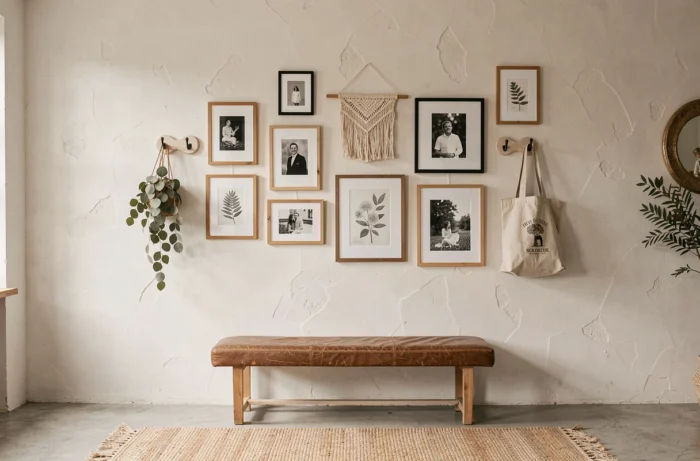
The wall composition of mismatched frames, mixing photos, illustrations, and small objects on floating shelves, remains one of the most accessible ways to personalize an interior. The 2026 approach favors natural wood or matte metal frames rather than uniform black.
For a successful composition, start by arranging the frames on the floor before fixing them. Align the centers rather than the edges, and leave a regular spacing of a few centimeters between each piece to avoid a cluttered effect.
9. XXL green plants as a focal point in a room
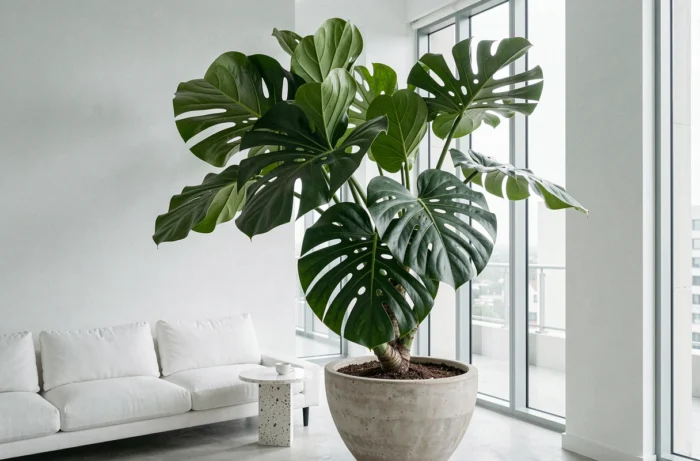
A single large plant (ficus lyrata, strelitzia, monstera) placed in a corner or next to a sofa works better visually than ten small plants scattered around. The pot matters as much as the plant: terracotta, matte ceramic, or woven basket extend the natural palette.
Field reports vary on this point: some spectacular varieties require a brightness that not all interiors can provide. Check the room’s exposure before choosing. A zamioculcas or sansevieria tolerates partial shade, while a strelitzia needs direct light for several hours a day.
10. Heritage Style: mixing old and contemporary in the same room
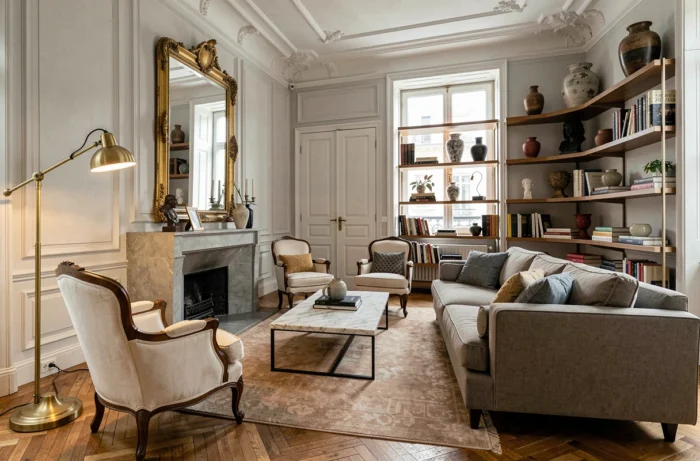
The Heritage style, identified as a strong trend in 2026, involves combining vintage or thrifted pieces with contemporary furniture. A 1960s armchair next to a sleek coffee table, a patinated brass vase on a modern console: these contrasts add depth to an interior.
What distinguishes this approach from a simple random mix is the coherence of the color palette. Keep a guiding thread (warm tones, wood, natural materials) and the eras coexist without friction.
Transforming an interior often comes down to two or three well-targeted choices rather than a complete overhaul. Changing the lighting, introducing an unexpected texture, or applying an earthy color to a wall is enough to alter the perception of a space. The natural materials and warm palettes of 2026 facilitate these combinations, as they forgive mixes and age better than synthetic finishes.