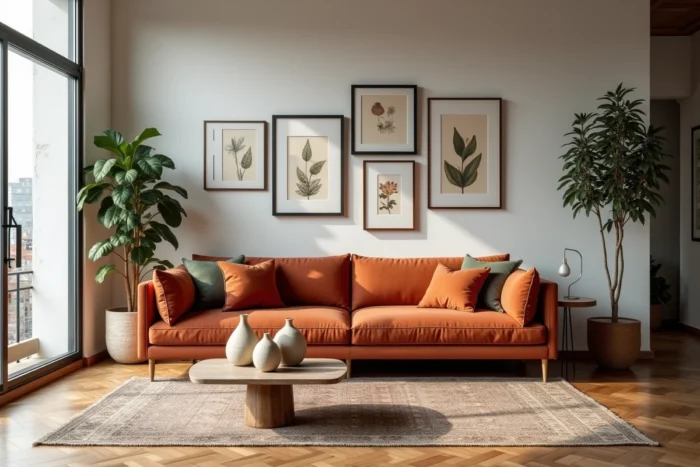
Custom interior decoration is not built by stacking trendy references. It starts from a precise diagnosis: what objects are already present, what uses structure each room, and where to intervene to produce a maximum effect with minimal purchases. We often observe interiors saturated with impulsively bought decorative elements, which end up neutralizing any visual identity instead of reinforcing it.
Chromatic immersion: treating color as a building material
The approach of adding touches of color (an ochre cushion, a terracotta vase) has shown its limits. Chromatic immersion consists of varying a single shade from floor to ceiling, playing on variations of materials and finishes rather than multiplying colors.
In practical terms, this means painting the walls, woodwork, and ceiling in the same color family, then differentiating the surfaces by their texture: matte on the walls, satin on the woodwork, boucle fabric on the seating. The result is an enveloping space that does not rely on the accumulation of decorative objects.
A common pitfall is choosing a color that is too saturated without testing the light effect at different times of the day. We recommend applying a test patch of at least one square meter and observing it for three days, morning and evening, before making a decision. A sage green that seems soft in natural light can turn dull gray under cold artificial lighting. The choice of the color temperature of the bulbs (warm white, neutral) is an integral part of the chromatic project.
Specialized resources like imaginairdeco.fr allow you to explore coherent palettes and material-color combinations suitable for each room configuration.
Ceilings and floors as decorative surfaces in an interior decoration project
Limiting decoration to walls and furniture ignores half of the available surfaces. Colored, textured, or molded ceilings radically change the perception of volumes. A ceiling painted in a darker tone than the walls visually lowers the height and creates a sense of intimacy, useful in a living room with overly vertical proportions.
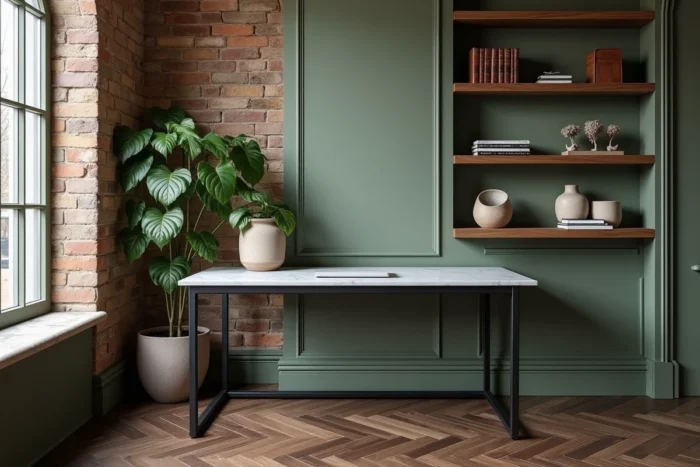
On the floor side, graphic patterns (cement tiles, herringbone or broken stick parquet) bring rhythm without adding a single object to the space. A worked floor becomes a design element in its own right.
Targeted interventions rather than complete renovation
Replacing a floor covering represents a heavy project. An effective alternative is to treat a specific area: a hand-woven rug placed under the coffee table delineates a living area in an open living room, while a painted floor (resin or special paint) in an entry creates a strong visual transition without masonry work.
For the ceiling, a simple cornice or a play of glued strips is enough to structure a room. A targeted intervention on a single surface often produces more effect than a diluted overall makeover.
Personalized decoration from existing objects: inventory method
Before any purchase, we recommend a decorative inventory. The exercise is simple but rarely practiced: gather in one room all the objects with decorative potential (frames, ceramics, textiles, travel souvenirs, old tools) and sort them into three categories.
- Objects with strong emotional or aesthetic value that deserve staging (dedicated lighting, pedestal, suitable frame)
- Functional objects whose appearance can be enhanced by a simple change of context (a raw wood cutting board placed against a kitchen wall, an old blanket draped over a railing)
- Neutral or redundant objects, to be given away or stored out of sight to free up space
This method avoids the catalog reflex: buying an object because it corresponds to a trend, without any connection to the history of the place or the habits of its occupants. A unique interior is first built by subtraction, then by highlighting what remains.
Local craftsmanship and custom pieces: a differentiation lever in decoration
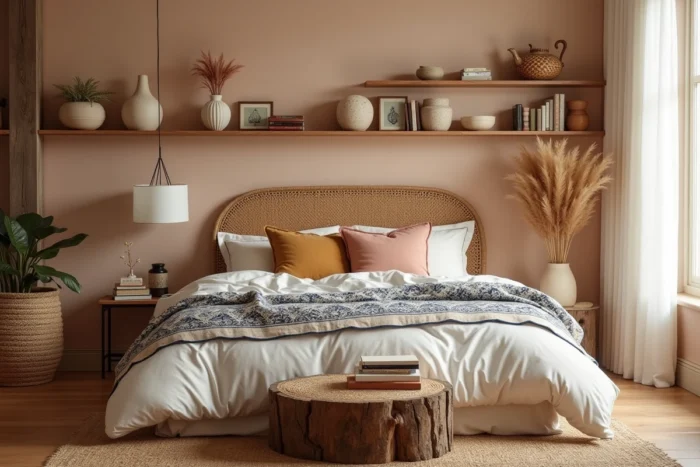
Furniture and objects made by local artisans create an immediate break with the uniformity of interiors furnished by large retailers. A forged steel shelf by a blacksmith, a hand-turned ceramic light fixture, or a solid wood piece adjusted to the exact dimensions of a sloped wall: these pieces become focal points because they do not exist anywhere else.
Local craftsmanship also brings geographical coherence. Using materials and know-how from the region anchors the style of the house in its context, rather than imposing an aesthetic disconnected from the place.
Balancing between unique pieces and budget
Hiring an artisan costs more per unit than an industrial piece of furniture. The effective strategy is to concentrate the investment on one or two key pieces per space (a dining table, a living room pendant) and complement with standard or reclaimed elements. The contrast between the artisanal piece and the regular furniture enhances the uniqueness of the whole.
- Identify the piece that visually structures the room (often the largest surface: table, main seating, central light fixture)
- Allocate the artisanal budget to this structuring element rather than spreading it over several accessories
- Complement with thrifted, reclaimed, or already owned objects to maintain diversity in origins and eras
The mix of eras and origins is precisely what distinguishes a lived-in interior from a decorated one. Personalization does not come from the number of objects but from the relevance of their association.
One last technical point often overlooked: adaptive lighting, even discreet, transforms the perception of all these elements. A variation in light intensity between morning and evening alters shadows, reflections, and color dominance. Without this adjustment, even a carefully designed decorative project appears static. Light remains the cheapest and most underutilized material in interior decoration.