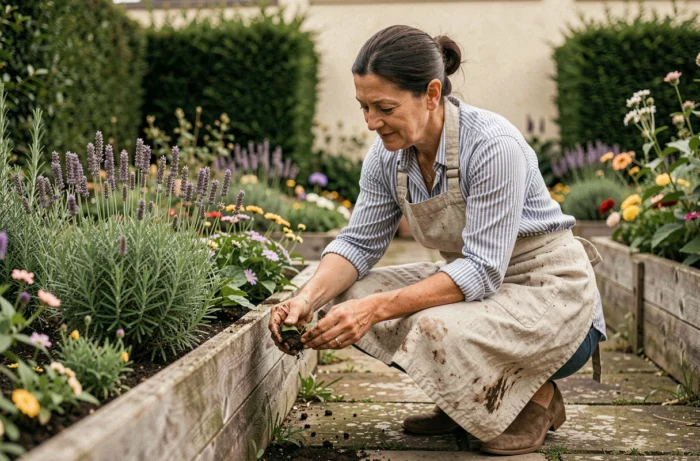
Designing a harmonious garden today requires working with often underestimated constraints. The local urban planning scheme of the municipality, summer watering restrictions, soil type, and the evolution of the local climate weigh as heavily on the final result as the choice of a beautiful plant palette. Setting these parameters in advance prevents the need to replant two years later.
Local Urban Planning and Regulatory Constraints of Private Gardens
Before outlining any flowerbeds, checking the rules of the local urban planning scheme remains a step often overlooked. Depending on the municipality, the local urban planning scheme may impose a minimum proportion of permeable surface on the plot, prohibit certain opaque fences, or limit the height of hedges along property lines.
These constraints directly influence the layout. A high soil coverage coefficient, for example, prevents the concreting of a large terrace and encourages the use of draining materials (stabilized gravel, grassed cellular slabs). Conversely, some municipalities require local species in adjoining hedges, which reduces design freedom but ensures better landscape integration.
Shared gardens and ground-floor apartments add a layer of complexity. The condominium regulations often take precedence over personal desires, and any modification visible from the common areas may require a vote at the general assembly. Checking these points before buying the first bag of potting soil saves costly disappointments.
Specialized resources allow for a deeper exploration of every aspect of garden design, particularly at https://www.lesprit-jardin.fr/, where topics range from plant selection to seasonal maintenance techniques.
Water Management in the Garden: Adapting Irrigation to a Changing Climate
In Auvergne-Rhône-Alpes, amateur gardeners surveyed about their practices indicate that the most common adaptations concern irrigation, mulching, and reasoned soil management. The observation is clear: water management has become the primary adjustment lever for individuals.
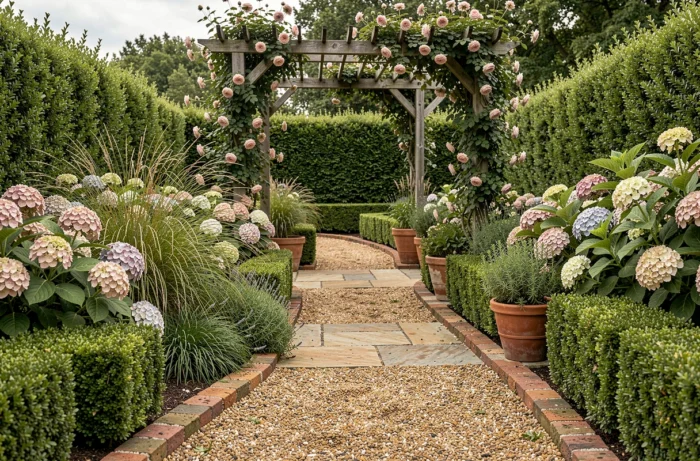
Rainwater harvesting is shifting from individual action to collective effort. In Cachan, the municipal operation “My Rainwater” distributed 6,000 rainwater collectors in 2025, including to family gardens and ground-floor apartments. This type of local initiative is worth investigating before investing in an individual tank, as subsidies vary significantly from one municipality to another.
On the ground, several complementary practices reduce dependence on tap water:
- Organic mulching (pruned branches, fallen leaves, straw) limits evaporation and nourishes the soil as it decomposes, gradually improving its retention capacity.
- Watering basins at the base of shrubs concentrate water where the roots need it, rather than dispersing it on the surface.
- Scheduled drip irrigation in the evening reduces consumption compared to hose watering and adapts well to both flowerbeds and vegetable gardens.
The issue is not just ecological. A garden designed to function with less water also requires less maintenance time in summer, a period when most owners prefer to enjoy their outdoor space rather than keep it alive.
Resilient Plant Palette: Choosing Plants for Tomorrow’s Climate
The choice of plants must take into account future climate compatibility, not just the current conditions of the garden. Exposure remains a valid criterion, but it is not sufficient. Landscapers are already testing new drought-resistant species while observing that a plant adapted to drought can still be vulnerable to winter cold spells.
This uncertainty advocates for a diversified approach. Relying on a single family of species exposes one to massive losses if a season deviates from the norm. In contrast, a palette combining Mediterranean perennials (lavender, rosemary, sage), ornamental grasses, and deep-rooted shrubs offers better resilience against climatic shocks.
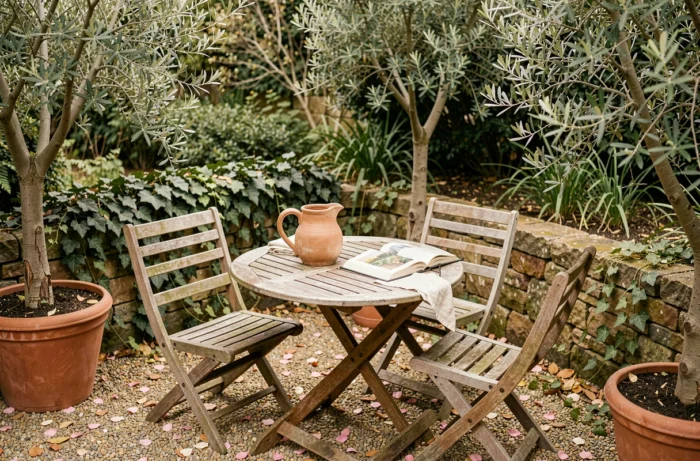
Before ordering online or at a garden center, checking the updated list of regulated species for their invasive nature prevents mandatory removal. This list evolves regularly and varies by region.
Creating a Flowerbed that Requires Minimal Intervention
The idea of a “maintenance-free” garden is a myth. Every garden requires a minimum of care. However, a well-designed flowerbed reduces maintenance to a few seasonal interventions rather than weekly follow-ups.
The key lies in the initial planting density. A densely planted flowerbed covers the ground in one to two seasons, limiting the growth of weeds and reducing the need for weeding. Combining persistent ground covers (creeping thyme, helianthemum) with medium-height perennials creates a natural layering that occupies space without leaving bare soil.
Structuring Space in a Modest-Sized Garden
In urban and suburban areas, private plots tend to shrink, necessitating a rethink of the layout: every square meter must serve multiple functions.
Some concrete principles help structure a small space without overcrowding it:
- Visually separate areas (relaxation, vegetable garden, passage) by changing materials or levels rather than using hedges that consume space.
- Utilize verticality with climbing plants on trellises, hanging planters, or a trained fruit tree against a wall.
- Limit permanent furniture to one area, and favor folding or stackable seating for the rest.
A well-structured modest-sized garden often appears larger than a vast but confusing space. The clarity of the plan matters more than the area.
A sustainable garden relies on the compatibility between the soil, climate, and regulatory constraints of the land. Checking the local urban planning framework and water conditions before selecting plants remains the most reliable sequence for achieving a result that endures season after season.