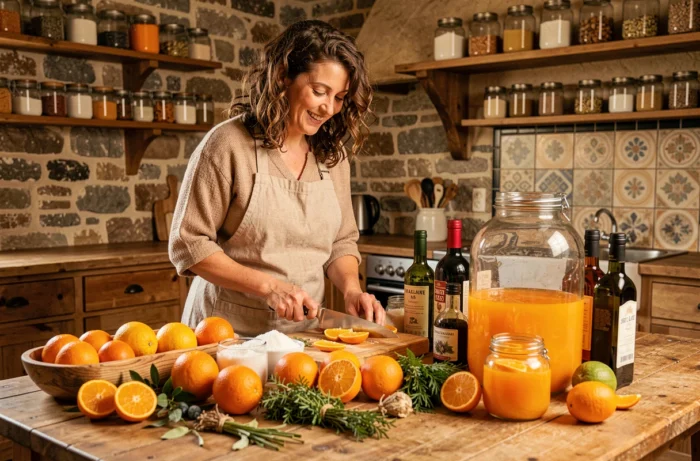
The Jacqueline is based on three components: dry white wine, lemonade, and grenadine, whose interactions change radically depending on when they are combined. For a preparation of five liters intended for a large group, the central question is not the list of ingredients (it fits in one line) but the timing of assembly: which steps can withstand a rest in the cold, and which require execution to the minute.
Timing of the Jacqueline assembly: what can wait and what cannot
The classic trap of a large-volume Jacqueline is mixing everything in a bowl two hours before guests arrive. The lemonade then loses its fizz, and the drink becomes flat, sweet, and lacking in depth.
Several guides dedicated to large-format preparations recommend to keep the wine base separate from the carbonated elements until serving. Specifically, the white wine and grenadine syrup can be mixed in advance and placed in the refrigerator. The lemonade stays in its closed bottle, also kept cold, and only joins the mixture at the last moment.
A source dedicated to the Jacqueline recipe for 5 liters recommends a refrigeration period of about one hour for the wine-grenadine base. This time allows the flavors to marry without sacrificing the bubbles, since the lemonade is not yet incorporated.
The sugar-acidity balance is also at play at this stage. The grenadine syrup measured in a still-cool white wine diffuses better than when added to a mixture already elongated with lemonade. Tasting at this stage allows for adjustments before the final volume makes correction more risky.

Proportions for five liters of Jacqueline: dosage table
Competing recipes agree on a common base but differ on the ratios. The table below summarizes the data available from the consulted sources.
| Ingredient | Approximate proportion | Volume for 5 liters |
|---|---|---|
| Dry white wine | About 60 to 70% of the total volume | 3 to 3.5 liters |
| Lemonade (like Sprite or lemon soda) | About 25 to 30% | 1.25 to 1.5 liters |
| Grenadine syrup | About 5 to 10% | 25 to 50 cl |
| Additional sweetener (cane syrup or honey) | Optional, a few tablespoons | To taste |
| Seasonal fruits in pieces | Optional | A few handfuls |
The “additional sweetener” column deserves a note. Some recent versions for large groups suggest honey as an alternative to cane sugar syrup, which brings a different roundness to the palate. Honey dissolves less easily in cold liquid: it should be diluted in a bit of warmed white wine before being incorporated into the refrigerated base.
Choice of white wine and impact on the final result
The Jacqueline is not a cocktail that masks the wine. With a proportion of over 60% of the total volume, dry white wine is the backbone of the mixture. A wine that is too oaky or too tannic conflicts with the sweetness of the grenadine. A wine that is too neutral results in a bland outcome once diluted by the lemonade.
Fruity and light dry white wines work best. In contrast, a sweet or semi-sweet wine creates a sugary imbalance as soon as the grenadine is added, and the lemonade amplifies this sensation.
For five liters, the cost of the wine represents the bulk of the budget. Choosing an entry-level but decent wine (a dry table white, an Entre-Deux-Mers, a Picpoul) yields better results than an expensive wine whose complex aromas will be drowned out by the other components.
Seasonal fruits in the Jacqueline: decorative addition or true flavor contribution
Adding sliced or diced fruits is an option that classic individual-dose recipes often overlook. For a five-liter format, it is an interesting lever, provided one understands what the fruits actually bring.
- Citrus fruits (lemon, orange) add acidity that balances the sweetness of the grenadine and soda. They should be added to the wine-grenadine base during the cold rest to release their essential oils.
- Red fruits (strawberries, raspberries) enhance the color and provide a complementary fruity note, but they soften quickly. Incorporating them at serving time avoids ending up with mush at the bottom of the bowl.
- Firm-fleshed fruits (apple, pear in thin slices) hold up better over time and add a pleasant texture for guests who pick at them with their glasses.
The choice of seasonal fruits rather than imported fruits changes the game in terms of flavor. A perfectly ripe fruit infuses naturally, while a fruit picked green and stored for a long time brings only fiber without flavor.
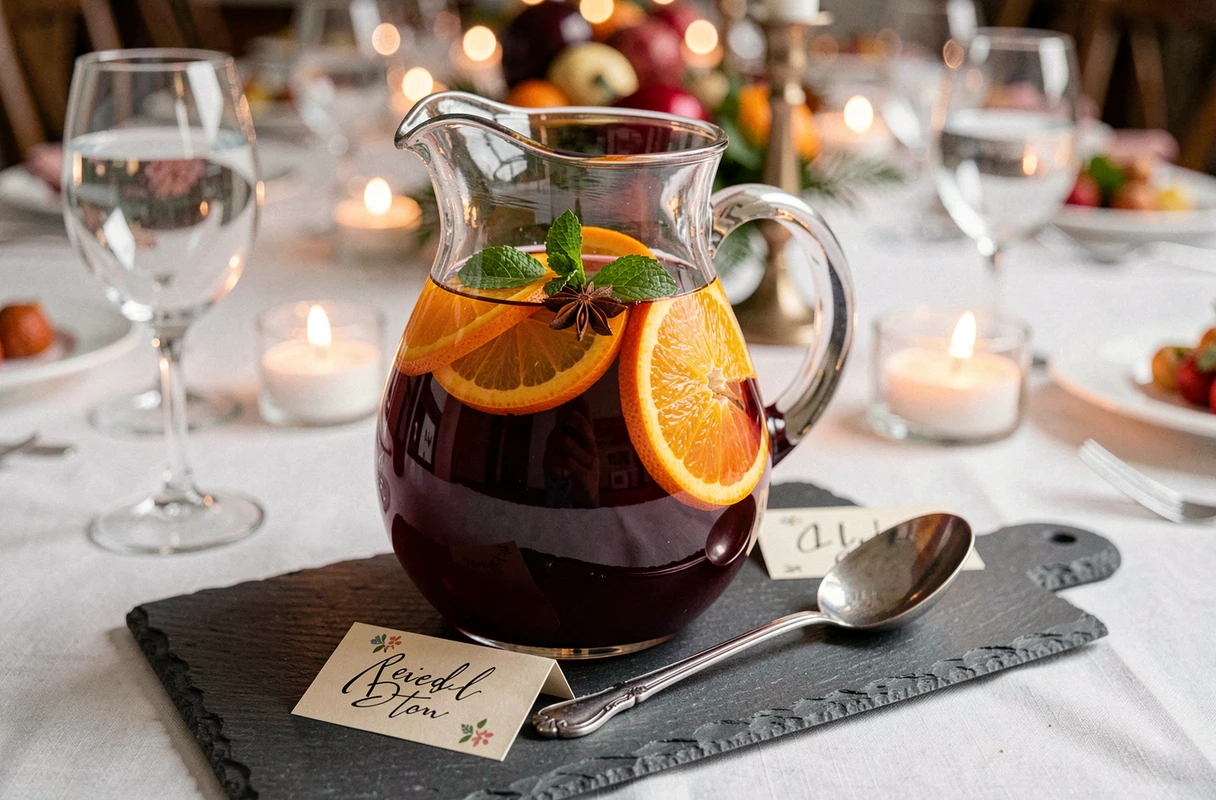
Serving in a large group: managing replenishment
Five liters of Jacqueline serve about twenty to thirty glasses depending on the size of the cups or glasses used. For a group of thirty guests, it’s just enough if everyone refills.
The most effective strategy is to prepare multiple wine-grenadine bases in the cold and a reserve of closed lemonade. Instead of preparing a single five-liter bowl, splitting into two bases of 2.5 liters allows for serving a first batch well chilled and fizzy, then launching the second when the first is finished.
This approach solves the main problem of the Jacqueline in large quantities: the lemonade does not remain sparkling for more than twenty to thirty minutes in an open container. Serving in two stages ensures that each guest enjoys a glass with bubbles, not a warm, flat bottom of a bowl.
The equipment is limited to a large bowl or a drink dispenser with a tap, a ladle, and enough ice to maintain the temperature. The ice melts and dilutes the mixture: plan to have plenty, placing it around the container rather than inside if dilution is an issue.
The Jacqueline remains an aperitif whose success relies less on the recipe than on the timing of each element’s entry. Preparing the base the day before, yes. Adding the lemonade two hours ahead, no. This timing detail makes all the difference between a festive drink and a sweet rosé wine without character.